Shifts in Dealer Pacing Within Live Casino Streams and Resulting Adjustments to Basic Strategy Applications

Live casino streams have seen measurable changes in dealer pacing throughout 2026 as platforms integrate faster software protocols and respond to increased player volumes during peak hours in July. These adjustments influence how participants apply basic strategy across table games such as blackjack where decision timing intersects directly with card distribution rates. Data from industry monitoring indicates that average hand completion times dropped by several seconds per round in many North American and European streams compared with 2025 baselines.
Defining Dealer Pacing in Live Stream Environments
Dealer pacing refers to the speed at which operators handle card shuffles, reveals, and player interactions within broadcast feeds. Platforms coordinate these elements through automated prompts that guide dealers while maintaining regulatory compliance across jurisdictions. Observers note that faster pacing often correlates with higher table throughput yet requires players to process strategy charts under tighter constraints without altering the mathematical foundation of optimal play.
Documented Shifts Observed in Mid-2026
Reports compiled through July 2026 highlight a consistent trend toward accelerated dealer movements on major streaming services. Software updates introduced earlier in the year reduced idle periods between hands by streamlining camera transitions and dealer instructions. Those who track operational metrics across multiple sites report that blackjack tables now complete rounds at rates 12 to 18 percent quicker during evening sessions when traffic peaks. Such modifications stem from platform efforts to accommodate larger audiences while preserving game integrity under oversight from bodies like the Nevada Gaming Control Board.
Regional Variations in Pacing Practices
North American streams tend to emphasize rapid card handling during high-volume periods whereas certain Asian platforms maintain steadier rhythms to align with local viewer preferences. Canadian regulatory summaries released in spring 2026 documented similar accelerations at licensed live dealer operations where minimum hand speeds increased to support expanded player capacity. These differences create distinct environments where basic strategy execution must adapt to local pacing norms without deviating from established probability tables.
Players encounter these shifts most directly when multi-hand options appear on screen and dealers progress through decisions at elevated tempos. Strategy applications remain rooted in the same core charts yet demand quicker recognition of situations such as soft totals or pair splits when time between prompts contracts.
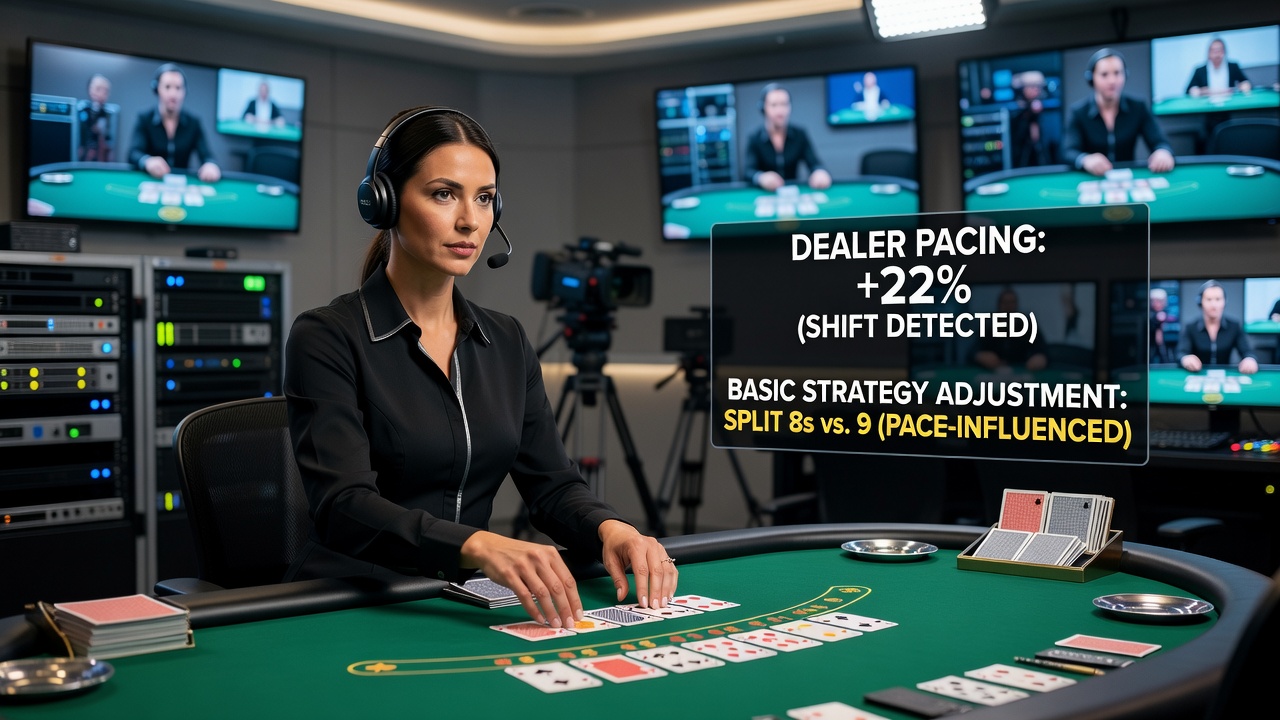
Adjustments to Basic Strategy Applications
Basic strategy charts themselves stay unchanged because they derive from long-term mathematical expectations rather than session speed. However application methods evolve when pacing tightens. Participants often pre-load common decisions into memory patterns so responses occur before the next prompt arrives. Research summaries from academic gaming studies indicate that players who rehearse index plays in advance maintain higher adherence rates under accelerated conditions compared with those relying solely on on-screen reference tools.
One documented pattern involves increased use of keyboard macros or quick-select interfaces on platforms that permit them. These tools allow strategy execution to match dealer rhythm without introducing errors. Figures from operational reviews show error rates rising modestly when new pacing protocols launch until users adjust over several sessions.
Practical Examples from Stream Data
Take one analysis of blackjack streams covering March through June 2026 where hand logs revealed that players facing 16 against dealer 10 executed standing decisions more consistently once pacing stabilized at higher speeds. Another case tracked multi-player tables where split opportunities appeared more frequently due to compressed round cycles and required faster identification of favorable pair situations. Such examples illustrate how external timing pressures influence execution fidelity while the underlying strategy values remain constant.
Platforms have responded by offering optional strategy overlays that update in real time with current hand data. These features help bridge the gap between traditional chart study and live application under variable dealer tempos. Industry associations including the American Gaming Association have noted rising adoption of such aids across regulated markets.
Monitoring and Compliance Considerations
Regulatory frameworks require that pacing adjustments preserve fairness and do not alter game mathematics. Agencies in multiple regions conduct periodic audits of stream timing logs to confirm compliance. Data released through these channels demonstrates that basic strategy outcomes align with theoretical expectations even as operational speeds vary.
Those monitoring long-term trends point to continued refinement of dealer training modules that balance speed with accuracy. This ongoing calibration supports both player engagement and adherence to jurisdictional standards without modifying core strategy principles.
Conclusion
Shifts in dealer pacing within live casino streams have prompted measurable adaptations in how basic strategy gets applied during play. While the foundational charts endure unchanged, execution techniques evolve through preparation methods and interface tools that accommodate faster round cycles documented through mid-2026. Continued data collection from regulatory and industry sources will track these patterns as platforms refine their operational approaches across different regions.