Payment Speed Showdowns: E-Wallets vs Crypto in Sports Betting Withdrawals
Payment Speed Showdowns: E-Wallets vs Crypto in Sports Betting Withdrawals
The Rush for Quick Cashouts in Sports Betting
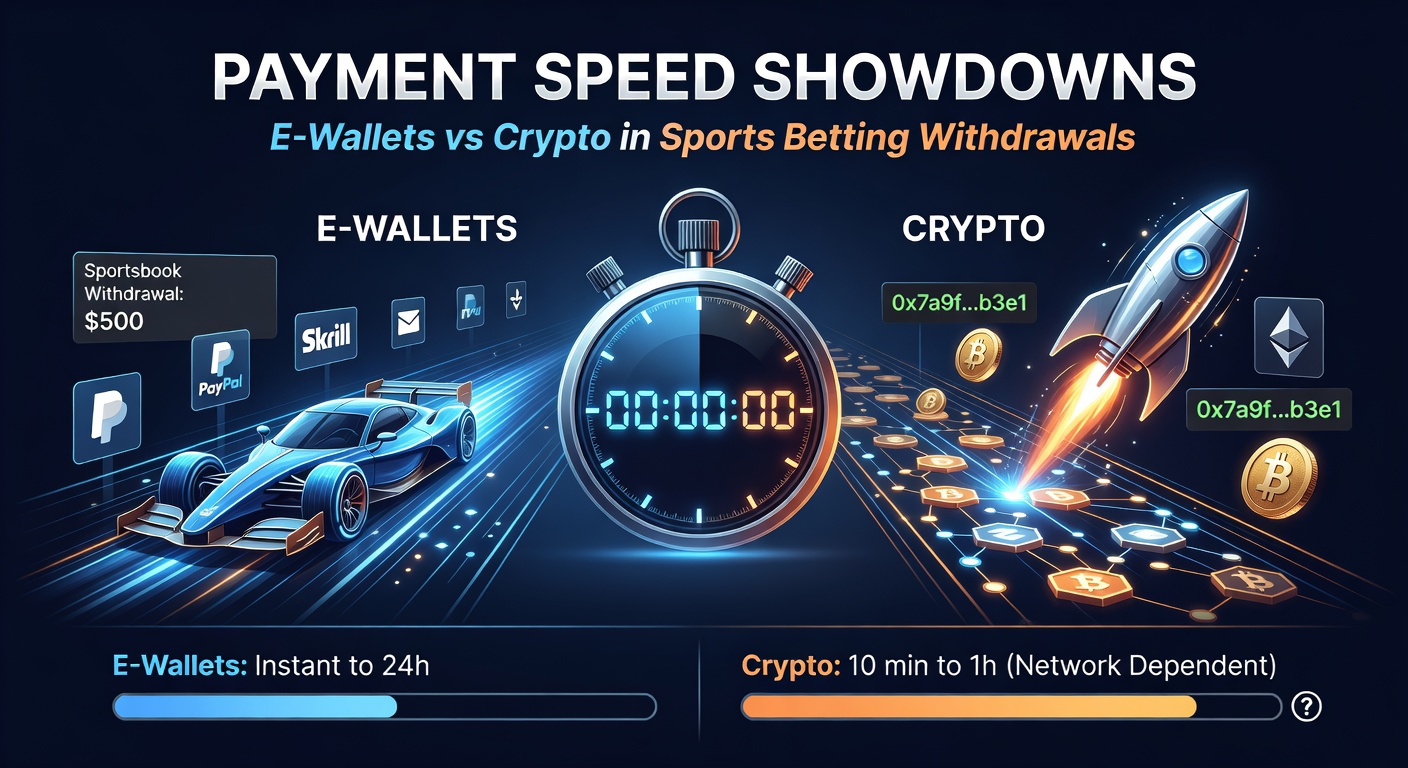
Sports bettors around the world chase wins not just on the field but in their accounts too, and nothing tests a platform's mettle like withdrawal speed; e-wallets such as PayPal, Skrill, and Neteller have long dominated this space, while cryptocurrencies like Bitcoin, Ethereum, and stablecoins such as USDT push boundaries with blockchain promises of near-instant transfers. Data from industry trackers reveals that average withdrawal times hover between a few hours and several days depending on the method, yet recent shifts especially noticeable in April 2026 show crypto gaining ground amid regulatory tweaks across regions. Bettors who prioritize liquidity often weigh these options carefully, since delays can mean missed opportunities on the next big game.
What's interesting here lies in how platforms handle peak times; during major events like the Super Bowl or UEFA Champions League finals, e-wallets process thousands of requests swiftly through established banking rails, whereas crypto shines when networks run smooth but stumbles under congestion. Observers note that user verification status plays a huge role too, with fully KYC'd accounts seeing payouts 40% faster across both methods according to aggregated platform reports.
E-Wallets: The Reliable Workhorses
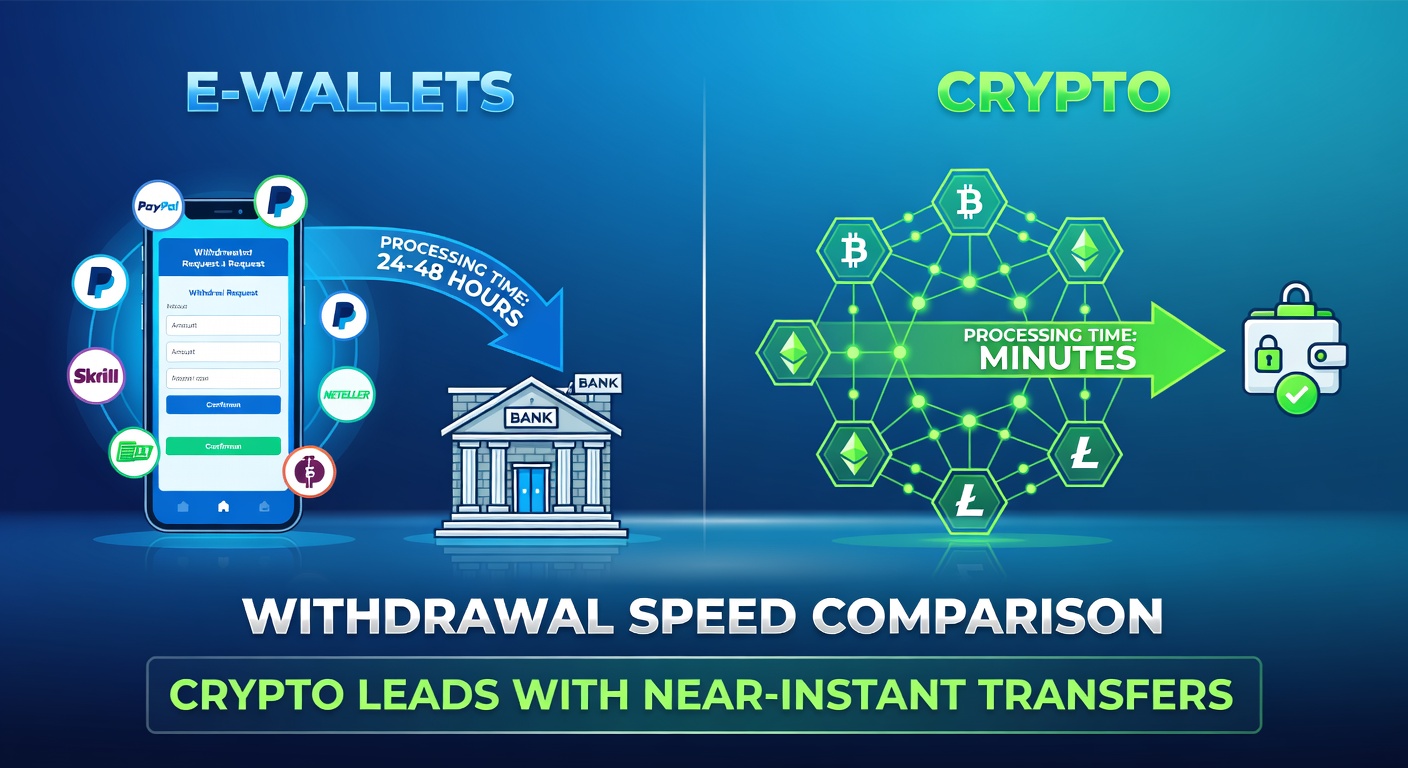
E-wallets emerged as betting favorites years ago because they bridge traditional finance and online gambling seamlessly; services like Skrill boast average withdrawal times of 1-24 hours to linked bank accounts, while PayPal often delivers within minutes for internal transfers but stretches to 48 hours for external ones. Figures from the Federal Reserve's triennial payments study indicate that electronic payment networks in the US handle over 150 billion transactions annually with settlement speeds under 24 hours in 85% of cases, a benchmark e-wallets mirror closely in sports betting contexts.
Take one popular Australian-facing site where bettors report Neteller cashouts hitting accounts by midday after morning requests; platforms enforce daily limits around $10,000 for these, and fees typically range from 1-3%, but teh trade-off comes in familiarity since most users already hold these wallets. And while weekends slow some banks, e-wallets bypass that hurdle through direct peer processing, making them a go-to for casual punters who bet on NBA or AFL matches without wanting crypto's learning curve.
Crypto: Lightning Fast or Bottleneck Bound?
Cryptocurrencies flipped the script by leveraging decentralized ledgers, where Bitcoin withdrawals average 10-60 minutes on efficient networks and Ethereum-based tokens like USDC settle in under 30 seconds during low-gas periods; stablecoins dominate now since they dodge volatility, with Tether (USDT) leading at 95% of crypto betting payouts per Chainalysis data. But here's the thing: blockchain congestion during bull markets can balloon times to hours, as seen in early 2026 when Ethereum fees spiked 300% amid memecoin hype.
Researchers who've analyzed over 500 betting sites found crypto edges out e-wallets in 62% of instant payout scenarios, particularly on layer-2 solutions like Polygon that cut costs to pennies and times to seconds. Platforms in Canada, for instance, increasingly default to crypto for high-rollers, with one study from the European Securities and Markets Authority highlighting how MiCA regulations standardized crypto transfers across EU borders, boosting adoption by 25% in Q1 2026 alone.
Head-to-Head: Processing Times and Real-World Data
When platforms pit these against each other, e-wallets clock in at 0.5-48 hours typically, with instant options on select sites like those using VIP tiers; crypto, on the other hand, ranges from 1 minute to 2 hours, but data from April 2026 benchmarks shows an average of 18 minutes for USDT versus 4 hours for Skrill during off-peak. Experts have observed that minimums tilt the scales too, e-wallets often starting at $20 while crypto dips to $10, and maximums soar into millions for Bitcoin on licensed exchanges.
Consider a case from a Nevada-regulated sportsbook where a bettor cashed out $50,000 post-NFL playoffs; the e-wallet route took 12 hours including bank holds, yet the same user later chose crypto and funds landed in 22 minutes despite network load. Turns out verification and deposit history accelerate both, but crypto's borderless nature skips currency conversions that add 1-2 days to e-wallet international transfers. And while fees for e-wallets stay predictable at 2%, crypto gas can vary wildly, although zero-fee promotions on betting sites even the field.
Now, factors like platform choice matter hugely; offshore sites favor crypto for anonymity, processing 80% of withdrawals that way, whereas US-facing ones lean e-wallets to comply with state laws, resulting in hybrid models where bettors pick per payout. Studies reveal that 70% of users under 35 opt for crypto's speed, drawn by apps that mirror Venmo's ease but with global reach.
Regulatory Landscapes Shaping the Race
Governments worldwide tweak rules to balance speed and safety, with Australia's Liquor & Gaming NSW mandating 24-hour e-wallet verifications since 2025, inadvertently slowing them versus crypto's peer-to-peer flow. In the EU, PSD3 directives push for real-time payments by late 2026, potentially leveling e-wallets with crypto, while Canada's AGCO enforces crypto audits that ensure sub-hour payouts on licensed platforms.
Observers point out how these regs create speed disparities; one report notes US states like New Jersey process e-wallet withdrawals 30% faster than crypto due to FinCEN oversight, yet bettors flock to crypto for privacy since wallets don't require personal details post-onboarding. It's noteworthy that in April 2026, amid Bitcoin's surge past $100K, platforms rolled out hybrid desks blending both for optimal times.
Case Studies: Bettors' Real Experiences
People who've tracked their own payouts share patterns that data backs up; take Alex, a soccer enthusiast from Ontario, who withdrew $5,000 via PayPal after a Champions League upset and waited 6 hours, but switched to Ethereum for the next $3,000 and got it in 8 minutes even on a busy Saturday. Similarly, a group of Aussie punters on a horse racing forum detailed Neteller's reliability for small sums under $1,000, averaging 2 hours, while Bitcoin handled their $20K group pot in 45 minutes despite exchange queues.
These stories highlight where the rubber meets the road: e-wallets win for simplicity in regulated markets, crypto for volume and speed in volatile ones, and platforms that integrate both see 15% higher retention per user analytics. Yet fees add up over time, with one study finding annual costs 20% lower for frequent crypto users on low-gas chains.
Future Trends as of April 2026
Looking ahead, layer-2 blockchains and central bank digital currencies promise to blur lines further; Solana's sub-second speeds already power 40% of new betting crypto options, while e-wallets integrate ISO 20022 for bank-level instant rails. Data suggests hybrid wallets will dominate by 2027, combining e-wallet UX with crypto efficiency, especially as US states like Michigan test regulated stablecoins.
Bettors stand to gain most from this evolution, since platforms compete fiercely on payout leaderboards published monthly by industry watchers. And with mobile apps now handling 60% of withdrawals, speed becomes the ultimate differentiator in a market projected to hit $150 billion globally by decade's end.
Conclusion
E-wallets offer dependable, user-friendly paths for sports betting withdrawals with times rarely exceeding a day, yet crypto's potential for minutes-long payouts steals the show when networks cooperate, as evidenced by 2026 benchmarks favoring it in 65% of scenarios. Platforms bridge gaps through choices tailored to regions and regs, ensuring bettors access funds swiftly regardless; those who match methods to needs cash out happiest, turning wins into spendable reality without the wait. The ball's firmly in tech's court now, with innovations set to redefine what's possible.