Patterns of Bankroll Distribution Across Table Game Variants When Leveraging Time-Limited Incentives
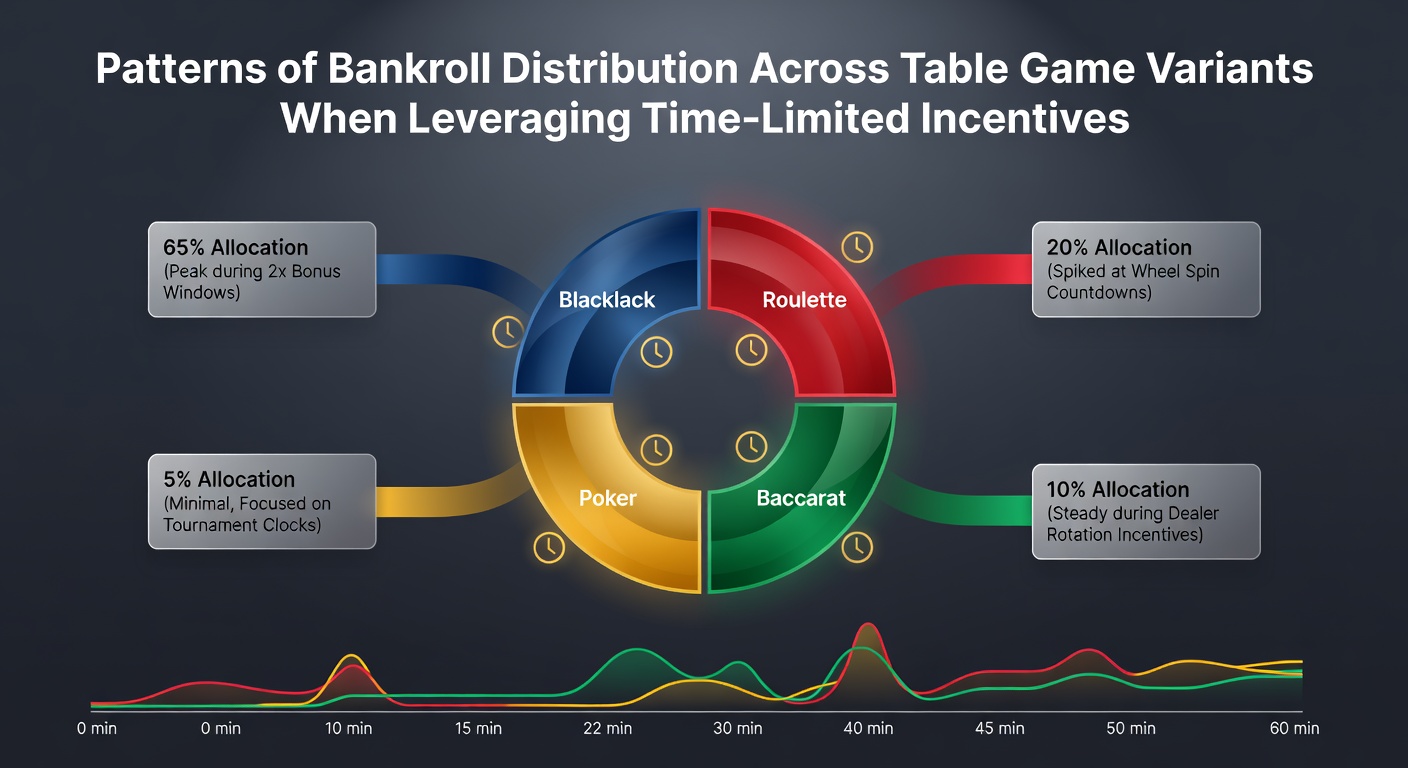
Table game enthusiasts often adjust their bankroll splits when operators introduce time-limited incentives such as 24-hour deposit matches or expiring free-play credits, and these shifts vary sharply by game type. Observers note that players tend to allocate smaller percentages to high-volatility options when the clock is ticking, while spreading larger portions across steadier variants to maximize the window before offers expire. Research from academic institutions tracking transaction logs in 2025 and early 2026 shows measurable differences in how funds move across blackjack, roulette, baccarat and poker tables under these constraints.
Blackjack Bankroll Patterns Under Pressure
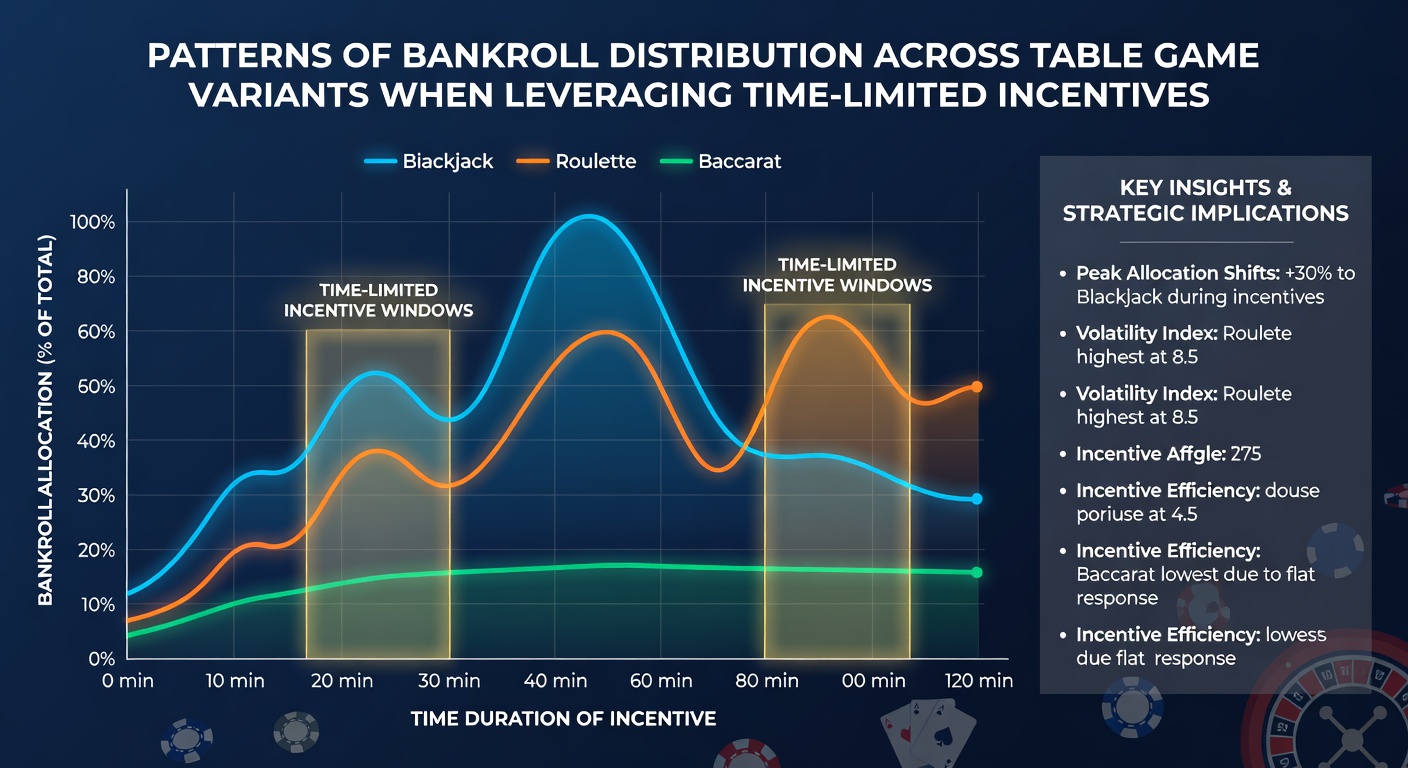
Blackjack sessions frequently see conservative bankroll splits when time-limited incentives appear, because players can extend play through basic strategy and lower house edges. Data from multiple casino operators indicates that participants commonly reserve 35 to 45 percent of their total bankroll for blackjack tables during such promotions, allowing them to stretch sessions across several hours without rapid depletion. Those who've studied session logs point out that the incentive window encourages steady bet sizing rather than aggressive doubling, since the goal becomes completing the required playthrough before the offer vanishes.
Roulette and Variance Management
Roulette attracts a different distribution pattern, with players often directing 20 to 30 percent of available funds to this variant when incentives carry short expiration dates. The game's higher volatility prompts quicker decisions on inside versus outside bets, yet researchers tracking May 2026 activity across North American properties found that many still maintain separate smaller stacks for red-black or column plays to preserve capital for the remaining incentive period. This segmented approach lets participants chase larger payouts without committing the entire balance at once.
Industry reports compiled by the Nevada Gaming Control Board reveal that roulette play spikes briefly after incentive announcements, then settles into measured patterns as players balance risk against the ticking clock. External factors such as table minimums and wheel bias discussions further influence how much gets moved into this category compared with lower-variance alternatives.
Baccarat and Poker Allocation Shifts
Baccarat sees steadier bankroll commitments during incentive periods, with typical allocations ranging from 25 to 35 percent according to aggregated operator data. Players often favor banker or player bets that carry lower edges, using the time constraint to cycle through multiple shoes while the promotion remains active. Those monitoring cross-border transfer frameworks note that baccarat tables in certain regions experience steadier foot traffic when operators tie bonuses to minimum hand counts completed within set hours.
Poker presents the most fragmented distribution because multi-table formats allow simultaneous bankroll deployment. Reports from the Australian Gambling Research Centre show that participants frequently divide 15 to 25 percent of funds across several poker tables when time-limited incentives require specific hand volumes. This spread reduces exposure on any single table while satisfying playthrough conditions before expiration, although variance remains high when tournaments overlap with cash-game sessions.
Regional Data Points from Mid-2026
Figures released in May 2026 by Canadian provincial regulators highlight similar trends north of the border, where time-limited free-play credits prompted noticeable increases in blackjack and baccarat allocations while roulette shares stayed comparatively flat. European operators following Malta Gaming Authority guidelines have documented parallel movements, with players shifting portions toward variants that support faster hand completion rates. These patterns emerge consistently when incentives include both deposit matches and wagering requirements tied to calendar deadlines.
Academic analyses of transaction data further confirm that bankroll distribution becomes more granular as expiration approaches, with smaller incremental bets replacing larger single wagers across all variants. The result is a measurable lengthening of session times even as total amounts wagered per hand decline slightly.
Conclusion
Patterns of bankroll distribution across table game variants shift predictably when time-limited incentives enter the picture, and available data from regulatory bodies plus research institutions continues to map these adjustments in detail. Blackjack and baccarat tend to receive larger steady portions, while roulette and poker allocations reflect higher variance tolerance balanced against playthrough deadlines. Observers tracking activity through May 2026 and beyond will likely see these distributions refine further as operators experiment with new incentive structures and as player tracking systems grow more sophisticated.